

Can you trust Yuka to choose your sunscreen?
Jun 27, 2026
Can you trust Yuka to choose your sunscreen?
Not entirely.
If you use Yuka to choose your skincare or cosmetics, you've probably wondered:
Does a low Yuka score mean a sunscreen protects less effectively?
It's an understandable assumption.
The reality, however, is quite different.
Yuka does not measure how well a sunscreen protects your skin from UV rays. It evaluates something else entirely: its ingredients.
Understanding this distinction is essential if you want to make informed choices about sun protection.
What does Yuka actually measure?
Contrary to popular belief, Yuka does not test sunscreens in a laboratory.
Instead, the app analyzes the product's INCI list (International Nomenclature of Cosmetic Ingredients), which is the official list of ingredients found in every cosmetic product sold in Europe.
The INCI list is mandatory and follows international naming conventions so that every ingredient has the same name worldwide.
Ingredients are listed in descending order of concentration until they reach 1%. Below that threshold, manufacturers are free to list them in any order, meaning the exact concentrations remain unknown.
Based on this ingredient list, Yuka evaluates ingredients it considers controversial, potential allergens, certain UV filters that are still debated within the scientific community, as well as some environmental considerations.
However, Yuka does not evaluate the actual performance of a sunscreen.
It does not measure the actual SPF, UVA protection, water resistance, photostability or how effectively the sunscreen performs under real-life conditions.
A sunscreen can therefore receive an excellent Yuka score without necessarily providing better UV protection.
Is SPF really verified?
Yes... but with an important nuance.
Before a sunscreen can be marketed in Europe, manufacturers must support their SPF claims using standardized testing methods.
Claims such as SPF 30, SPF 50 or SPF 50+ are therefore regulated.
However, this does not guarantee that every sunscreen available on the market always delivers exactly the protection stated on the label.
In recent years, several independent laboratories have found that certain sunscreens failed to reach their claimed SPF when retested independently.
This doesn't invalidate the regulatory framework itself, but it does highlight that discrepancies can sometimes exist between manufacturer-submitted data and independent post-market testing.
Why Are Some Excellent Sunscreens Poorly Rated?
Because Yuka evaluates the formulation, not the performance.
Some sunscreens contain highly effective, extremely stable UV filters that have been extensively studied and shown to provide excellent protection.
Yet some of these filters are classified by Yuka as "controversial," which can significantly lower the product's overall score.
Conversely, a sunscreen with an excellent Yuka rating is not necessarily more effective at protecting your skin from UV radiation.
The two evaluations simply answer two completely different questions.
One asks:
"What ingredients does this product contain?"
The other asks:
"How well does this sunscreen actually protect against UV rays?"
Another Important Limitation: Yuka Doesn't Know the Quantities
The INCI list tells us which ingredients are present, but not how much of each ingredient is used.
Two sunscreens may contain exactly the same ingredients while having very different concentrations.
And concentration matters.
It influences both efficacy and safety.
Since these percentages are proprietary and not publicly disclosed, Yuka cannot distinguish between an ingredient present in trace amounts and one used at a much higher concentration.
So, How Should You Choose a Sunscreen?
SPF is important—but sunscreen should never be your first line of defense.
Modern dermatology recommends a layered approach to sun protection.
The first step is adopting sensible sun habits: seeking shade, avoiding prolonged exposure during peak UV hours, and paying particular attention to protecting children.
The second step is wearing UPF 50+ sun protective clothing.
Unlike sunscreen, UPF 50+ swimwear provides constant physical protection. It doesn't wash off after swimming, isn't affected by sweating, and doesn't require reapplication every two hours.
That's why UPF 50+ swimwear has become one of the most reliable ways to protect the skin it covers.
Sunscreen should then be applied to all exposed areas.
When choosing one, look for:
-
an SPF appropriate for your level of exposure,
-
broad-spectrum UVA protection,
-
a texture you'll enjoy using,
-
and good water resistance if you'll be swimming.
Because ultimately, the best sunscreen is the one you'll apply generously and reapply consistently.
The Sunscreens I Personally Recommend
As a Doctor of Pharmacy, I'm often asked which sunscreen I personally use.
My answer may surprise you.
Cosmetic formulation or galenics was never my favorite subject during pharmacy school.
For this reason, I prefer relying on experts whose specialty is evaluating sunscreen performance.
My recommendations are based on in vitro testing and the work of two Doctors of Pharmacy who specialize in scientifically assessing cosmetics.
Their analyses are remarkably thorough and well worth reading.
Based on their findings, these are currently my personal favorites:
-
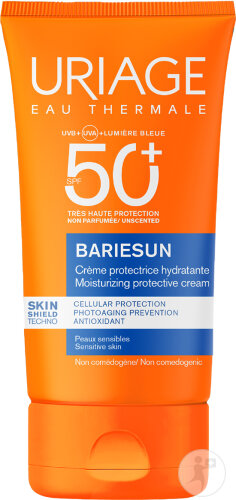
Uriage Bariésun SPF 50+ for adults.
-
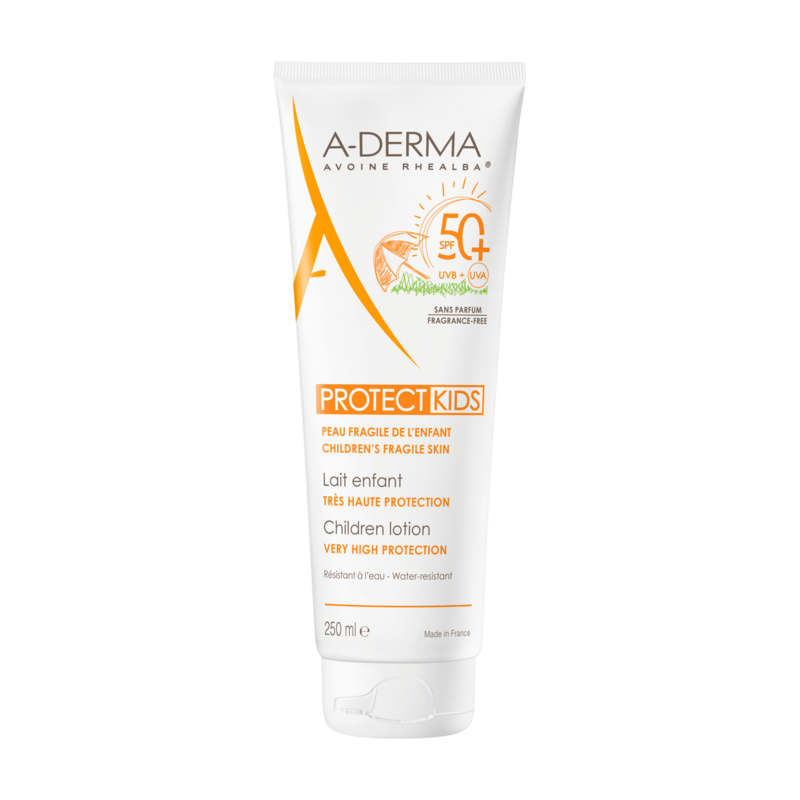
A-Derma Protect Kids SPF 50+, which our whole family uses.
In summary
Yuka is an excellent tool for evaluating the composition of cosmetic products.
But its score cannot tell you how well a sunscreen protects against UV radiation.
Choosing effective sun protection means looking at the bigger picture: scientifically validated performance, smart sun behavior, UPF 50+ sun protective clothing, and finally a sunscreen adapted to the areas that remain exposed.
At Juillet Juillet, we see sunscreen as the last layer of protection, not the first.
Good sun protection begins with smart habits and protective clothing. Sunscreen then completes the strategy by protecting the skin that remains uncovered.
Because the best sun protection isn't the sunscreen with the highest app rating.
It's the protection you'll actually use correctly, consistently, and alongside all the other proven ways to protect your skin.
Continue reading
You may also enjoy:
-
UPF vs SPF: What's the Difference?
-
Why UPF 50+ Swimwear Protects Better Than Sunscreen on Covered Skin
-
How Much Sunscreen Should You Really Apply?
Or discover our collection of stylish UPF 50+ swimwear, designed to help the whole family enjoy the sun with confidence.

